
A New Chapter in India–China Relations: Strategic Opportunities for Nepal
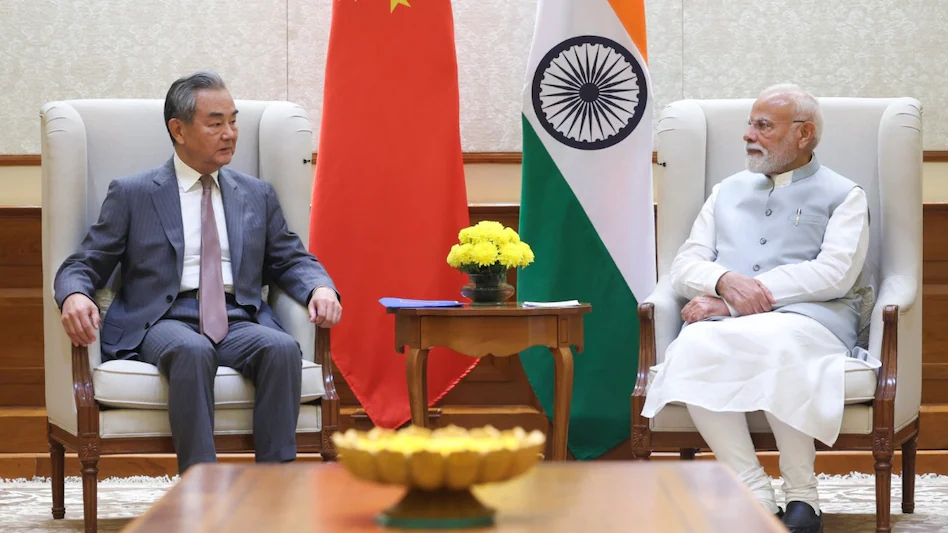
New Delhi / Kathmandu — The high-level meeting between Indian Prime Minister Narendra Modi and Chinese Foreign Minister Wang Yi in New Delhi signals a new phase of stability, trust, and cooperation in India–China relations. Held on the eve of the upcoming Shanghai Cooperation Organization (SCO) summit in Tianjin, the dialogue is expected to strengthen South Asian diplomacy and multilateral coordination.
Prior to meeting Prime Minister Modi, Wang Yi held talks with India’s National Security Advisor Ajit Doval and Foreign Minister S. Jaishankar. The discussions focused on maintaining peace along the Line of Actual Control (LAC), enhancing strategic dialogue, and rebuilding mutual trust.
Prime Minister Modi wrote on social media, “It was a pleasure meeting Foreign Minister Wang Yi. Since my meeting with President Xi Jinping in Kazan last year, India–China relations have progressed steadily with mutual respect for interests and sensitivities. I look forward to our next meeting at the SCO summit in Tianjin.”
This meeting comes amid rising trade tensions between India and the United States, following President Donald Trump’s decision to double tariffs on Indian goods. In this context, India–China dialogue is seen as crucial for regional stability and multilateral cooperation in South Asia.
Foreign Minister Wang Yi stated, “Both sides must strengthen strategic dialogue to build mutual trust. By resolving border issues and expanding cooperation in shared interests, we can seize this promising moment for improved relations.”
Nepal, situated as a geographic and strategic bridge between India and China, must view this development as a potential opportunity—albeit with careful diplomacy.
Peace along the India–China border could indirectly foster stability in Nepal’s frontier regions. Nepal should prioritize transparency, information exchange, and emergency coordination with both neighbors. A trilateral task force could be proposed to curb illicit activities, trafficking, and cross-border crime.
India and China are Nepal’s key trade partners, but access remains uneven. With improving India–China ties, China may seek to expand trade routes through Nepal, especially in rail and infrastructure development. Nepal could serve as a strategic transit hub—if it actively contributes to trust-building between the two powers.
Nepal must maintain an independent foreign policy while keeping equal distance from both neighbors. By positioning itself as a “partner for peace and prosperity,” Nepal can advocate for the creation of a formal trilateral mechanism—such as a Nepal–India–China Dialogue Forum—to collaborate on climate action, disaster management, and regional development.
Improved India–China relations are not just a bilateral achievement—they present a strategic opportunity for Nepal. Through clear vision, institutional readiness, and diplomatic finesse, Nepal can elevate its geopolitical standing. The potential for a new era of stability, prosperity, and coordination in South Asia now rests on Nepal’s strategic wisdom.
प्रतिकृया दिनुहोस्